
What Is Pure Nickel? Properties, Applications, and Key Characteristics

Table of Contents
Pure Nickel: Characteristics and Applications

Pure nickel is a high-purity metal containing 99 percent or more nickel and is valued for its excellent corrosion resistance, heat resistance, and superior workability. These properties make it an important material across a wide range of industrial applications.
This article provides an overview of the fundamental properties of pure nickel and explains how it is used in various fields.
Pure nickel is particularly valued in the chemical industry, where it demonstrates outstanding corrosion resistance in harsh environments such as alkaline solutions and halogen-containing gases. Its stability under these conditions makes it a reliable choice for chemical processing equipment.
In addition, pure nickel offers good electrical conductivity and weldability, which further expands its range of applications. However, care should be taken when handling pure nickel, as it may cause allergic reactions in some individuals.
Due to these exceptional characteristics, pure nickel, along with nickel-based alloys, is often selected as a key material for chemical-related and other demanding industrial applications.
Characteristics of Pure Nickel
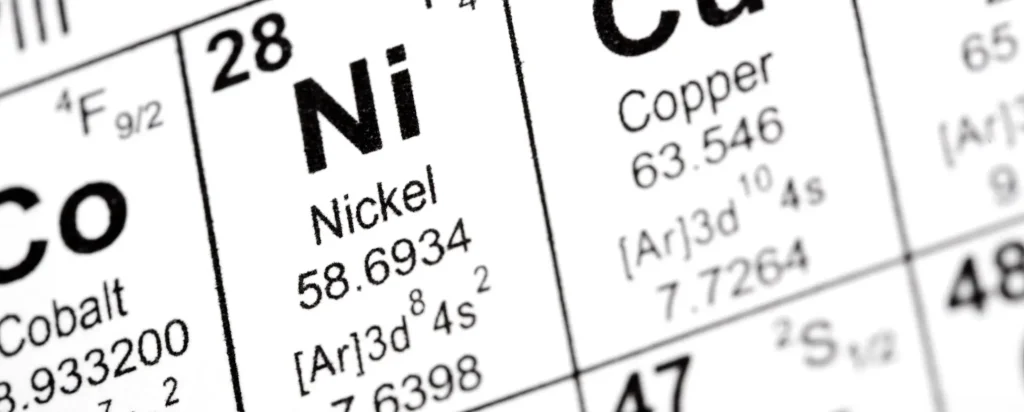
Pure nickel possesses the following characteristics, making it widely utilized in industries such as chemicals, electronics, aerospace, and medical devices.
Corrosion Resistance
Pure nickel is widely recognized for its high chemical stability and exceptional resistance to corrosion. It maintains consistent material performance even in highly aggressive environments such as acidic solutions, alkaline media, and chlorine gas.
Pure nickel also shows strong resistance to both seawater and freshwater, which makes it well suited for marine equipment and water treatment systems. In industrial settings, this level of corrosion resistance is critical for components that must operate reliably over long periods.
For this reason, pure nickel is commonly used in essential equipment such as chemical reactors, heat exchangers, and transport piping, where durability, safety, and long-term stability are required.
Heat Resistance
Pure nickel has a high melting point of approximately 1455 °C, allowing it to maintain structural integrity and stable properties even under extreme heat. This thermal stability makes pure nickel suitable for environments where conventional materials would degrade or lose strength.
In industries such as aerospace and energy, components are often exposed to severe thermal conditions. Pure nickel is frequently selected for these applications because it can operate reliably without significant changes in mechanical or chemical performance.
Pure nickel also performs well in low-temperature environments. It retains toughness and functional stability at cryogenic temperatures, which makes it suitable for use in cold-region equipment and space-related applications.
Workability
Pure nickel is a relatively soft metal with high ductility, which makes it highly suitable for a wide range of forming and processing operations. This characteristic is a significant advantage in the manufacturing of custom-made and precision components, where flexibility in design and processing is required.
Because pure nickel deforms easily without cracking, forming processes such as extrusion, bending, drawing, and punching can be performed more efficiently compared to harder metals. This reduces processing difficulty, shortens manufacturing lead times, and improves overall production efficiency.
The excellent ductility of pure nickel also enables the fabrication of components with fine features and complex geometries. This is particularly important in high-precision industries such as electronics and medical devices, where dimensional accuracy, repeatability, and material reliability are critical.
Applications of Pure Nickel
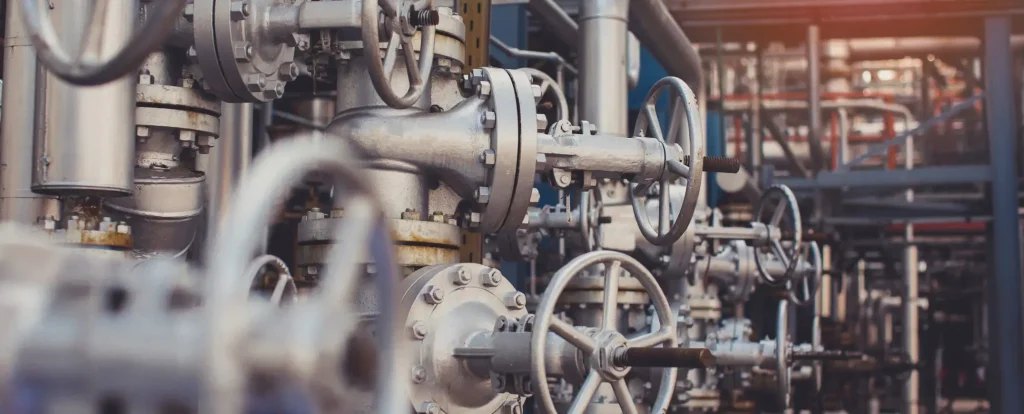
Pure nickel is rarely used on its own and is more commonly alloyed with other metals. Below are some specific examples of its applications:
Chemical Plant Equipment
Pure nickel is an ideal material for chemical plants due to its superior corrosion resistance.
Components such as reaction vessels, pipes, and valves are often exposed to harsh chemicals like acids and alkalis, and using pure nickel significantly enhances their durability.
In particular, pure nickel is chosen for chemical reactors and piping systems that transport highly corrosive substances, ensuring long-term stable performance.
Electrical and Electronic Components
Pure nickel is highly valued for electronic components due to its superior electrical conductivity.
It is used in battery terminals and mobile phone components, providing reliable electrical connections and long-lasting performance.
Additionally, it is utilized in lead frames for circuit boards and heat-resistant terminals, helping maintain performance even in high-temperature environments.
The adoption of pure nickel is essential for the efficient and safe operation of electronic devices, making it a key material in advanced technologies like smartphones and computers.
Plating
Pure nickel is widely used in plating due to its attractive luster.
This enhances the aesthetics of decorative products, including automotive and motorcycle parts, furniture, and accessories.
In addition to its visual appeal, nickel plating protects surfaces, further improving corrosion resistance. Because of its durability and elegant finish, pure nickel plating is also preferred for luxury items, ensuring a long-lasting aesthetic appeal.
Machining Challenges and Considerations for Pure Nickel

As mentioned earlier, while pure nickel has excellent workability, it also presents certain machining challenges.
The material exhibits relatively high tensile strength, hardness, and strong heat resistance, allowing it to withstand the elevated temperatures generated during cutting operations.
Because of these characteristics, pure nickel cannot be machined in the same way as conventional materials such as carbon steel or aluminum. Improper cutting conditions can lead to excessive heat buildup, accelerated tool wear, and unstable machining.
For stable and efficient machining, the use of ultra-hard cutting tools is recommended, along with appropriate coolant application. Careful control of cutting speed, feed rate, and depth of cut is also essential to suppress heat generation and maintain consistent machining quality.
Precision Machining Expertise at Koyo High Precision
At Koyo High Precision, we combine advanced machining technology with extensive hands-on experience to handle nickel materials and other difficult-to-cut metals with a high level of accuracy and reliability.
For challenging materials such as pure nickel, we carefully determine optimal machining conditions by closely monitoring chip formation, tool wear, cutting surface quality, and machining behavior during processing. This detailed approach allows us to achieve stable machining and consistent quality, even under demanding conditions.
If you are considering the machining of pure nickel or require support with complex or high-precision components, please feel free to contact us for technical consultation or project discussion. Our team will be happy to assist you.
